

Your consultation is with a consultant plastic surgeon who will examine the chest tissue, assess the relative contribution of fat and glandular tissue, and discuss the most appropriate surgical approach. We'll explain the likely scar placement, what improvement is realistic, and what recovery involves. Our goal is a natural-looking, masculine chest contour that helps you feel more confident.
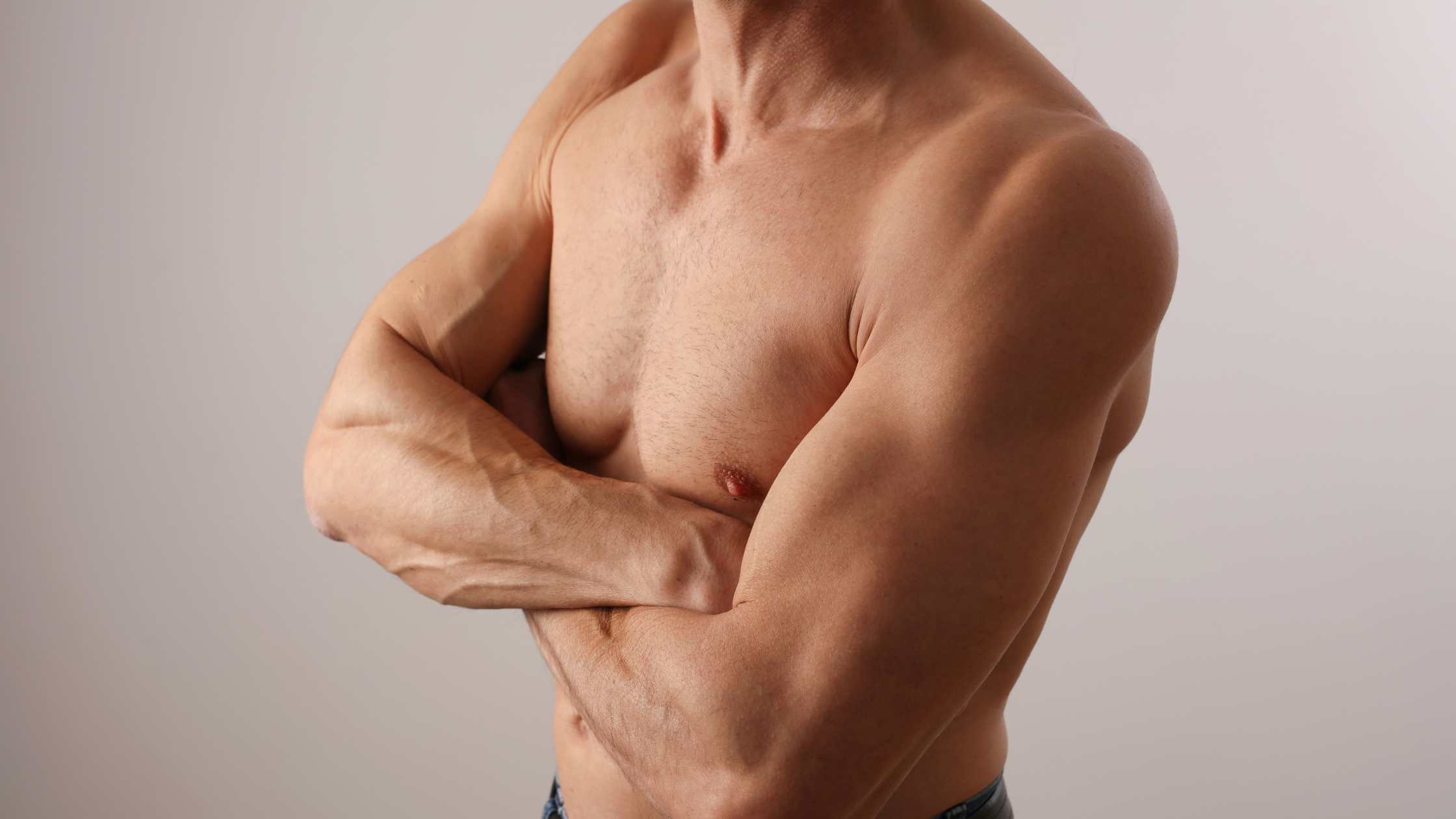
The surgical approach depends on the composition and volume of excess tissue:
In cases with significant skin excess, additional skin removal may be discussed. The procedure is typically performed under local anaesthetic and sedation as a day case.



You'll be welcomed by the team and your surgeon will confirm the plan and answer any remaining questions. Surgical markings are made and preoperative photographs taken. The procedure is performed under local anaesthetic and sedation. Afterwards, you'll recover in our purpose-built suite and go home the same day with a compression garment and clear aftercare instructions.
You'll see an immediate improvement in chest contour, with continued refinement as swelling settles over the following weeks and months. Scars from excision are typically small and located at the areolar edge, becoming less noticeable as they mature. The goal is a natural, masculine chest shape that restores confidence.


Gynaecomastia surgery is performed under local anaesthetic with sedation, avoiding general anaesthetic, and takes about 1–2 hours. Afterwards it’s normal to feel swelling, bruising and tightness across the chest for the first week or two – this is well controlled with a clear, personalised pain-relief plan, and discomfort settles steadily over the following weeks.
Swelling and bruising are expected in the first 1–2 weeks, and you’ll wear a compression garment for 6 weeks to support healing and contouring. Downtime is usually around 1–2 weeks, and most people return to desk-based work within a few days to a week. The chest shape continues to refine over 3–6 months. You’ll have follow-up appointments at 1 and 2 weeks and 3 months.
Most people return to desk-based work within a few days to about a week, depending on how physical your job is. Driving is usually possible again after 3–5 days, once you are in full control of the car – able to wear a seatbelt and steer without discomfort, and comfortably perform an emergency stop. Exercise, sport and heavy lifting are usually avoided for around 6 weeks while the chest heals.
Recurrence is uncommon once the excess glandular tissue has been removed. However, gynaecomastia can return if there is significant weight gain, or if an underlying cause – such as certain medications, anabolic steroids or a hormonal condition – continues. At your consultation we assess for any underlying causes and, where appropriate, we can arrange blood tests, refer you back to your GP, or refer you to our in-house men’s health specialist – so that anything treatable is addressed and your result is as durable as possible.
Where the gynaecomastia is mostly fatty and treated with liposuction, the incisions are around 5mm. Where there is firm glandular tissue that needs to be removed directly, a small incision is usually placed along the lower half of the areola, where the change in skin colour hides it well and it fades as it matures. Larger cases with excess skin may need additional incisions, which we will discuss with you beforehand.
Gynaecomastia can be made up of excess fat, firm glandular tissue, or a combination of both. Fatty tissue responds well to liposuction, and we use a laser-assisted system that contours the chest while also tightening the overlying skin – particularly useful where the skin has been stretched. The firmer glandular tissue behind the nipple usually needs to be removed directly (excision). In many men a combination of both techniques gives the smoothest, most natural chest contour. We assess which type you have at your consultation and tailor the approach accordingly.
Gynaecomastia is enlargement of the male breast tissue, usually related to a hormonal imbalance between oestrogen and testosterone. It can be linked to puberty, ageing, certain medications, anabolic steroids, cannabis use, excessive alcohol, and some medical conditions, though in many cases no single cause is found.
Because it can occasionally point to an underlying medical issue, we normally recommend seeing your GP before your consultation so the medical aspects can be investigated. For many men this has already been done by the time they come to us.
Gynaecomastia is usually present on both sides. Enlargement on one side only, a firm or fixed lump, dimpling of the skin, or any change to the nipple should be assessed by your GP urgently, before considering cosmetic surgery.