

Subfascial breast augmentation is a surgical technique that involves placing breast implants under the fascia, a strong layer of tissue that covers the chest muscles. This approach is different from submuscular breast augmentation, which involves placing implants under the chest muscles. Subfascial breast augmentation has several benefits over submuscular placement. First, it can result in a more natural-looking breast shape, especially for women with little existing breast tissue. Second, because the implants are placed above the muscles, recovery time is often shorter and less painful than with submuscular placement.

Subfascial breast augmentation is a surgical technique that involves placing breast implants under the fascia, a strong layer of tissue that covers the chest muscles. This approach is different from submuscular breast augmentation, which involves placing implants under the chest muscles.
Subfascial breast augmentation has several benefits over submuscular placement. First, it can result in a more natural-looking breast shape, especially for women with little existing breast tissue. Second, because the implants are placed above the muscles, recovery time is often shorter and less painful than with submuscular placement.
At Profile Aesthetic, we are proud to offer subfascial breast augmentation using Motiva ergonomix and ergonomix2 implants, which are designed to provide natural-looking results with a lower risk of complications such as capsular contracture and implant rotation.
Subfascial breast augmentation has several benefits, including:
At Profile Aesthetic, we are partners with Motiva to provide breast augmentation with the JOY programme. This programme includes extended warranty and other benefits to ensure that our patients receive the highest level of care and support throughout their breast augmentation journey.
Subfascial augmentation is performed under local anaesthetic and sedation. General anaesthetic is not required.
Prior to the procedure, your surgeon will measure your chest and use a pen to mark some guidelines on your skin.
Subfascial implants are inserted via a small inframammary incision. This is usually 2-3cm in length, in the crease beneath your breast.
Following the procedure, you will be taken to the recovery room where your post-surgical bra will be fitted. You will recover for a short time until you are able to go home.
We perform all breast augmentation surgery without drains, which reduces discomfort and speeds up recovery.

Breast augmentation with subfascial implants can provide several benefits, including increased breast volume and improved breast shape and symmetry. For the right patient, subfascial augmentation can produce very natural results without disruption of the chest muscles and is very popular among athletic patients. Overall, breast augmentation can enhance your overall body contour, boost your self-esteem, and allow you to feel more comfortable and confident in your appearance. The procedure offers long-lasting results, allowing you to enjoy the benefits of your enhanced breasts for years to come.
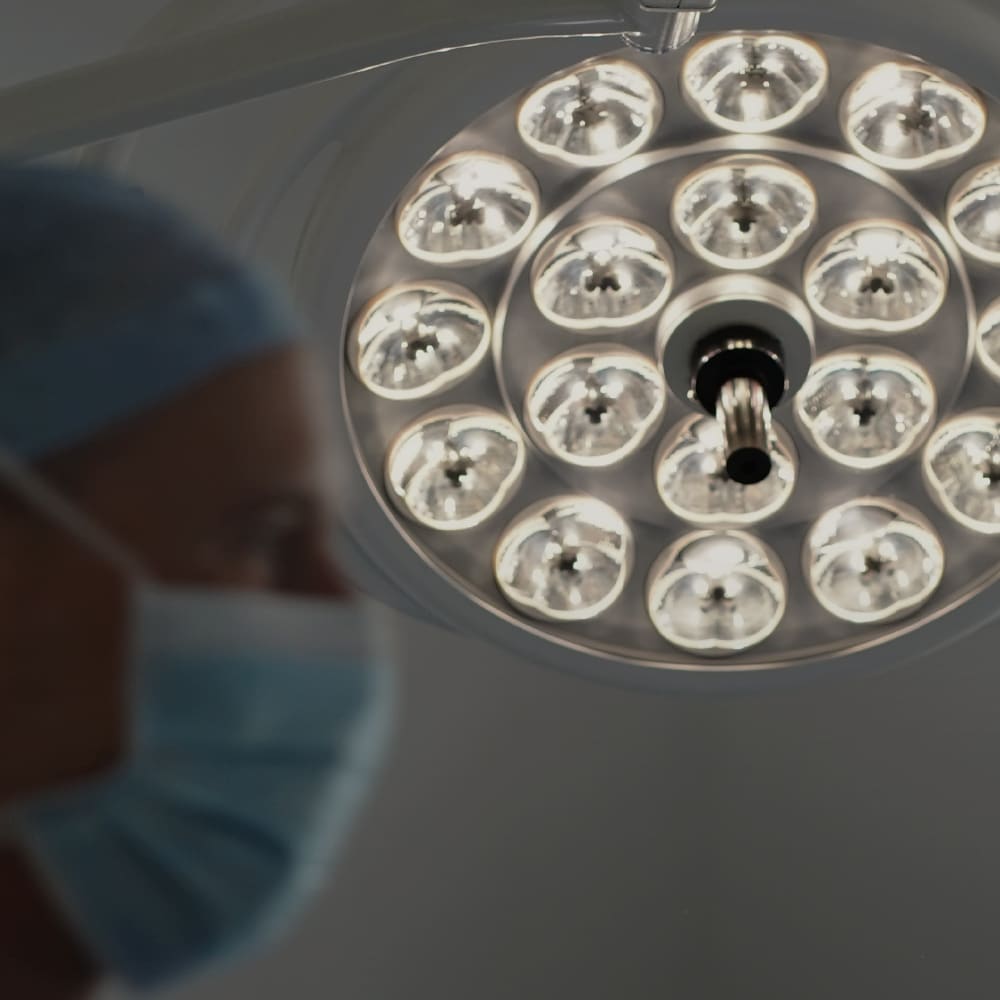


On the day of the procedure, you will arrive at our clinic, and our friendly staff will ensure your comfort and prepare you for surgery. Your surgeon will confirm the details of the procedure and together you will complete a consent form. Importantly, the surgeon will confirm the choice of implant with you and will ensure they are available. The surgeon will then perform some measurements and markings and take preoperative photographs. Our expert surgical team will perform the breast augmentation surgery according to your personalied treatment plan. The procedure is typically performed under local anaesthesia and sedation, ensuring your comfort throughout.
After the recovery period, you can expect to see improved breast volume, shape and symmetry. Your breasts will have a more proportionate appearance, enhancing your overall body contour. The results of breast augmentation with implants are long-lasting, providing you with enhanced breasts that can boost your self-confidence and make you feel more comfortable in your own skin.


Yes. All surgical procedures involve some scarring. Our goal is to position scars in the least noticeable places and use careful closure techniques to support good healing. We’ll explain what scar maturation typically looks like, how long it takes, and what you can do (such as sun protection and appropriate scar care) to optimise the final appearance.
Subfascial breast augmentation is performed under local anaesthetic with sedation, avoiding general anaesthetic, and takes about 1–2 hours. Afterwards it’s normal to feel some discomfort, swelling and bruising for the first week or two – this is well controlled with a clear, personalised pain-relief plan, and discomfort settles steadily over the following weeks.
Swelling and bruising settle over the first few weeks, with the shape refining over 3–6 months. Most patients take around 1–2 weeks of downtime and 1–2 weeks off work, and should avoid exercise, sport and heavy lifting for 8 weeks. You’ll wear a surgical support bra. You’ll have follow-up appointments at 1 and 2 weeks, 6 weeks, 3 and 6 months, then annually as required.
Time off work is typically 1–2 weeks, depending on how physical your job is. Driving is usually possible again after 1–2 weeks, once you are in full control of the car – able to wear a seatbelt and steer without discomfort, and comfortably perform an emergency stop. Gentle walking is encouraged early, but exercise, sport and heavy lifting are avoided for 8 weeks while you heal.
Modern breast implants have a strong safety record. At Profile Aesthetic we use Motiva and Polytech implants – both established manufacturers with extensive long-term safety data, advanced durable shells and extended warranties. They are made of medical-grade silicone and are designed to reduce complications such as rupture and capsular contracture. Breast implants are not considered lifetime devices, and as with any surgery there are recognised risks, which we discuss fully and honestly at your consultation. We keep detailed implant records for traceability, in line with UK guidance.
Implants are not guaranteed to last a lifetime, and manufacturers generally advise that breast implants have a lifespan of around 10 to 15 years, although many last longer. Replacement may be needed if there is a complication such as rupture, capsular contracture or a change in shape or position, or simply if your preferences change over time. Motiva and Polytech provide extended warranties covering certain issues. We’ll advise you on long-term monitoring and when a change might be worth considering.
After any implant is placed, the body naturally forms a thin layer of scar tissue, called a capsule, around it. In some people this capsule tightens and thickens – this is capsular contracture. It can make the breast feel firmer, change its shape, or occasionally cause discomfort, and it’s one of the more common reasons for further surgery. Modern implant surfaces and careful technique – including the no-touch, funnel insertion we use – help reduce the risk. Motiva implants in particular have a very low reported rate of capsular contracture, reflected in the enhanced warranty Motiva provides against it. We’ll explain how it’s managed if it does occur.
Many women breastfeed successfully after breast augmentation. We use an incision in the crease under the breast (inframammary) and choose implant placement to preserve the milk ducts and glandular tissue as far as possible. That said, the ability to breastfeed varies from person to person and can’t be guaranteed – with or without surgery. If breastfeeding in the future matters to you, please tell us at your consultation so we can take it into account.
Yes. You can still have breast screening (mammograms) after augmentation. It’s important to tell the radiographer you have implants, as additional or modified views (such as Eklund displacement views) can be used to see as much breast tissue as possible. Implants can hide a small amount of tissue on standard views, so sometimes ultrasound or MRI is used alongside mammography to ensure an accurate assessment. Staying breast-aware and attending your screening invitations remains just as important.
All surgical procedures carry risks. Common risks include bleeding, infection, scarring, wound healing issues, and the possibility of needing additional treatment or refinement. Some procedures have specific risks related to the area treated. We’ll talk you through the risks and how we minimise them, and you’ll have time to ask questions before deciding.
The first step is a consultation. We’ll assess your concern, discuss what’s realistic, explain your options (including non-surgical alternatives where appropriate), and outline recovery and pricing clearly.